


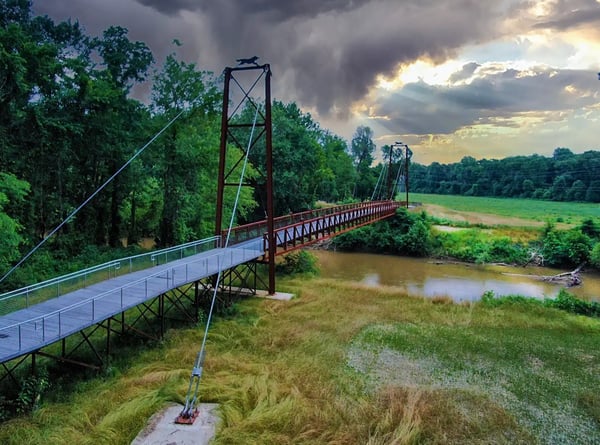
Trail designers often face a familiar dilemma when a project involves both elevation changes and long clear spans. Should a truss system extend across the entire structure, or is there a more cost-effective way to handle the different conditions along the alignment?
The answer most experienced designers land on: use each system where it performs best. Truss bridges are specified only where long clear span capability is structurally necessary. PermaTrak boardwalks handle the approach structures, where a modular, distributed-foundation system is more efficient and easier to build.
Understanding when to combine the two, and how to make that integration work, is where designers can save real money without compromising performance.
Jump to real-world applications & project examples below!
Read our FAQ (Frequently Asked Questions) about combining truss spans with boardwalk approaches.
Why Combine Truss and Boardwalk Systems?
Truss bridges are engineered for specialized structural demands. That engineering comes with higher fabrication and erection costs, which makes sense when you genuinely need that capability.
But many trail projects include extended approach sections on either side of a primary span, and extending a truss system across those sections when a boardwalk would do the job just as well adds cost without adding value.
A PermaTrak boardwalk system is well-suited for supported spans with distributed foundations. It installs modularly, can be transported to remote or constrained sites in manageable pieces, and handles wetland crossings with a minimal environmental footprint.
Limiting the truss to where it is structurally required, and using boardwalk for everything else, is how project teams optimize total budget while maintaining performance where it matters most.
When a Truss Bridge is Required
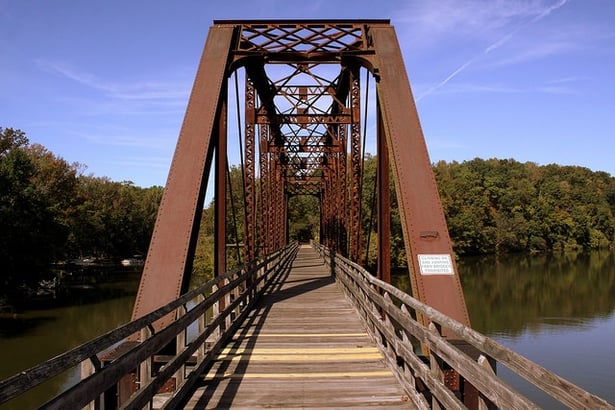
- Long clear spans (typically 50+ feet)
- Crossing over roadways, railways, or major waterways
- Hydraulic requirements that prohibit intermediate supports
- Deep water crossings where pile installation is prohibitive
- Restricted site access where full-length precast concrete beams cannot be transported or maneuvered into position
Why this matters:
Precast concrete beams must be delivered at full length, which can be limited by truck size, site access, and staging. Some truss systems can be delivered in sections and assembled on site, making them advantageous in tight corridors, remote trails, or environmentally sensitive areas.
When A Boardwalk System is the Better Choice
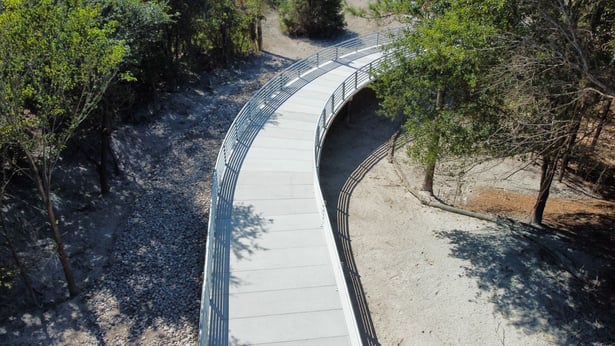
- Shorter spans with stable soil conditions
- Gradual elevation changes
- Wetland crossings where smaller footprint is acceptable
PermaTrak's top-down installation method allows the system to be built from the boardwalk itself without ground-based equipment, which is particularly valuable in sensitive areas where disturbing the surrounding environment is a permit concern.
Design Considerations
Elevation Matching
Coordinating surface heights between a truss bridge and a boardwalk approach is one of the first things to resolve in the design phase. Transition points need to be smooth, ADA-compliant slope continuity must be maintained throughout, and the connection detail between the two systems needs to be planned before geometry decisions downstream get locked in.
Structural Compatibility
Load transfer at the connection point, expansion joint detailing, and applicable design codes all require coordination between the structural engineer of record for the truss and the boardwalk design team. Projects may need to satisfy AASHTO pedestrian loading, IBC requirements, or both depending on ownership and jurisdiction. Getting these conversations started early prevents conflicts later.
Railing Continuity
On a truss bridge, the railing is a structural component, which limits design flexibility. Coordinating rail heights, attachment details, and finishes at the transition point is worth addressing in the design phase rather than during shop drawing review.
Construction Phasing & Site Access
Truss installation typically involves a large crane and a single-lift or assembled-in-place approach. PermaTrak boardwalk installation is more incremental. Sequencing these correctly, and confirming each system has the site access it needs during its installation window, is part of any well-run construction phasing plan.
Real-World Applications
Project Example 1: Illinois Route 59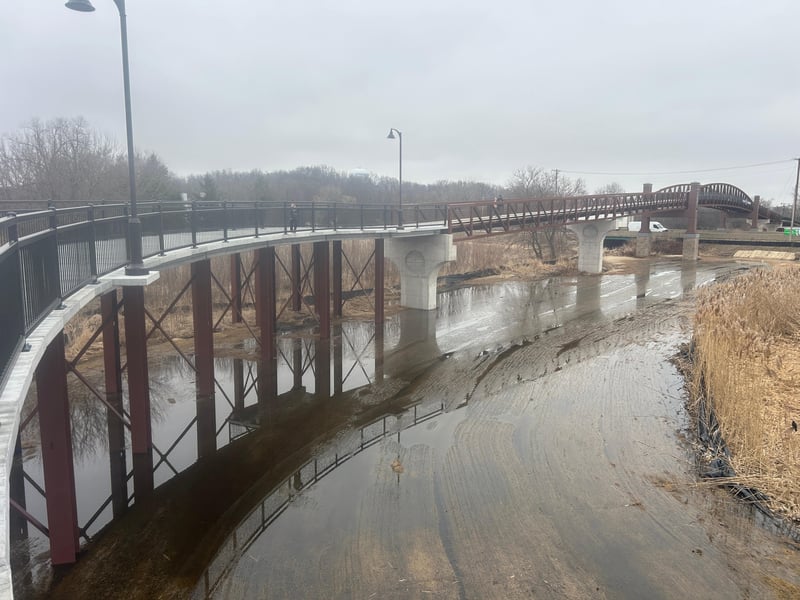
- Challenge: Long clear span required over roadway, with extended elevated trail approaches.
- Solution: Truss bridge used only over roadway, with precast concrete boardwalk system for approaches.
- Result: Reduced overall project cost while maintaining structural requirements over traffic.
Project Example 2: Wolf River Greenway
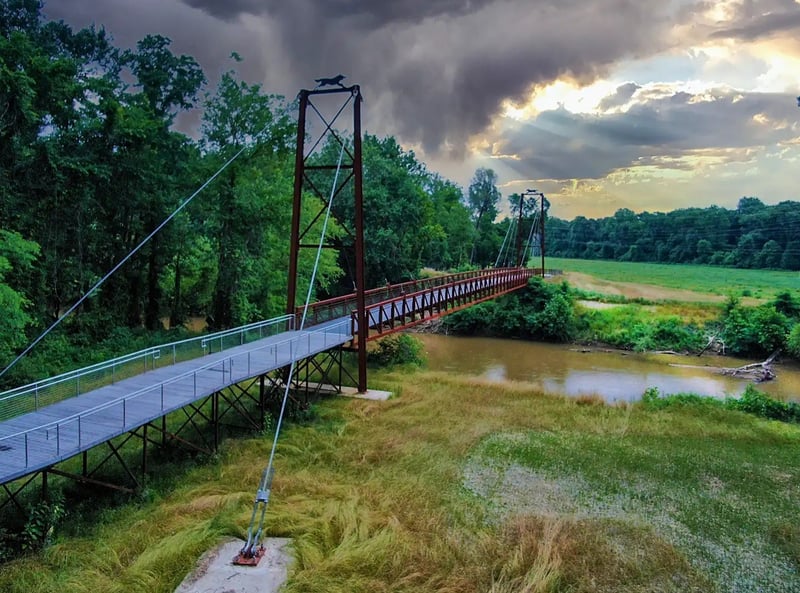
- Challenge: Major channel crossing with wetland approaches.
- Solution: Cable-stay truss over main channel, with PermaTrak precast concrete boardwalk approaches through wetlands.
- Result: Minimized environmental impact and reduced approach costs while achieving necessary span capability.
Project Example 3: South Lake Tahoe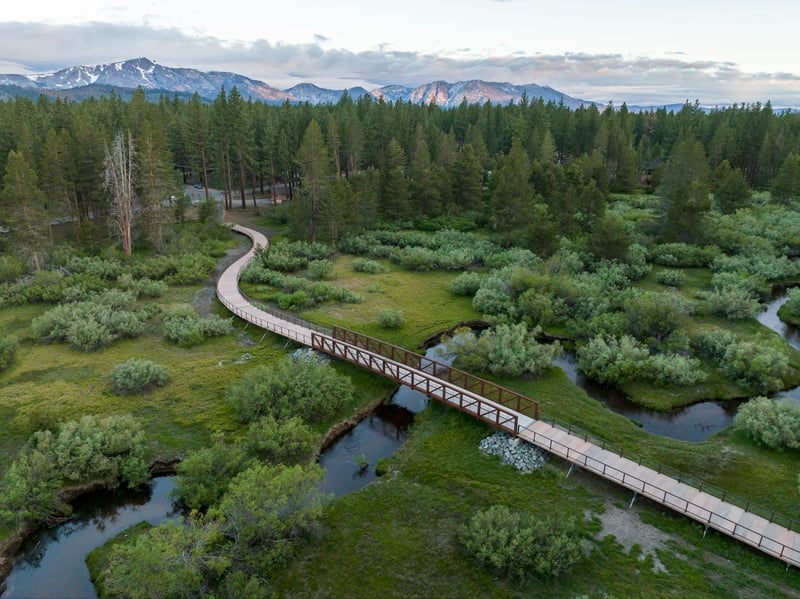
- Challenge: Elevated trail alignment with varying grades and localized long-span requirement.
- Solution: Strategic truss placement at primary span location, combined with boardwalk system for grade transitions and shorter spans.
- Result: Optimized budget and simplified installation without compromising durability or ADA compliance.
Best Practices for Integrated Design
Early Planning
Start by identifying exactly where long clear span capability is genuinely required on the alignment. Combined with a geotechnical report, that analysis gives the design team what it needs to make an informed decision about where the truss ends and the boardwalk begins. Lifecycle costs should factor into that conversation, not just initial construction.
Using a boardwalk for wetland approach crossings can also reduce permit complexity. Precast concrete boardwalk foundations have a smaller footprint than cast-in-place alternatives, top-down installation minimizes ground disturbance in environmentally sensitive areas, and the construction window in restricted areas is typically shorter.
A PermaTrak boardwalk can connect seamlessly to a pedestrian bridge. With the right coordination on load transfer, structural compatibility, and code compliance, the transition can be nearly invisible to trail users.
Permitting Advantages
- Using boardwalk for wetland crossings can reduce permit complexity
- Smaller foundation footprint in sensitive areas
- Faster installation timeline in restricted work windows
Frequently Asked Questions
Q: Can different railing systems be used on each structure type?
A: Yes. Different railing systems can be used on each structure type, but it’s important to plan early. Ensure railing heights meet the applicable codes used for each system, verify attachment methods are compatible with the structural materials, and coordinate finishes, colors, and style so the transition between bridge and boardwalk is visually seamless. This approach maintains safety, code compliance, and a consistent appearance along the entire trail.
Q: How do you handle the transition point structurally?
A: Typically, PermaTrak boardwalk will run right up to the truss bridge on both sides. For any foundation, a cast-in-place grade beam is used to support both the truss bridge and boardwalk. Since the truss bridge structure depth and the PermaTrak boardwalk structure depth are usually different, careful coordination is required to ensure proper alignment and a smooth transition between adjacent walking surfaces.
More here: From Trail to Boardwalk: Five Types of Transitions
Q: What does the deck transition look like between the truss bridge and the boardwalk?
A: At the point where the truss bridge deck meets the PermaTrak boardwalk surface, a cover plate or flexible joint treatment is used to bridge the gap between the two systems. This detail comes up on nearly every truss-to-boardwalk project and should be addressed during the design phase, not during shop drawing review.
The cover plate accommodates the difference in structural depth between the two systems, allows for independent movement due to thermal expansion and contraction, and provides a smooth, safe surface for cyclists and pedestrians crossing the transition. The specific cover plate design will depend on the elevation difference at the interface, the expected movement between systems, and the loading requirements.
PermaTrak can help coordinate this transition detail with the truss bridge engineer of record. Reach out to our team to discuss the specifics of your project.
Q: What’s the typical cost savings?
A: Hard costs to construct truss bridges and boardwalk systems can vary widely depending on your needs, but soft costs such as installation time, inspections, and maintenance can add up quickly.
Consider that truss bridges will clear span 40 ft up to say 250 ft. This mean that the large span must transfer all the structure load to two foundation supports, one per end. The large span simply means larger load and therefore larger and more robust supports. Most commonly truss bridge supports are cast-in-place concrete vertical abutments stemming from a horizontal concrete footing founded on driven piles. It is not uncommon to see heavy driven steel H piles under the concrete abutment. Heavy driven piles means large pile driving equipment and almost certainly eliminates the “top down construction” option. Casting concrete in a stream environment may also require coffer dams be in place for proper concrete placement.
Conversely, a boardwalk system comprises of smaller, modular components that can transfer much smaller loads requiring either lighter piles or smaller spread footings.
More info here: Pedestrian Bridge Design: Using a Truss Bridge or Boardwalk System [Materials, Costs & Comparison in 2026]
Strategic use of truss bridges where structurally necessary, combined with boardwalk systems for approaches, delivers cost-effective trail infrastructure without compromising safety or durability. Understanding where each system excels allows designers to optimize both budget and performance.
Have a project requiring both long clear spans and elevated approaches? Contact our team to discuss how integrated truss and boardwalk solutions can work for your specific site conditions.